The opportunity
Starpil Wax is a beauty and self-care wax brand with real product demand and almost none of the go-to-market infrastructure required to compound it.
Marketing and sales capacity sat near zero. Brand presentation was inconsistent. Paid could buy attention in bursts, but nothing durable was catching that demand and turning it into recurring revenue. Organic visibility, social referral, creative production, and the website were not running as one system. They were loose inputs waiting for an operating model.
That is a systems problem. The engagement was built that way: ads and PPC, web development, SEO, branding, and marketing under one spine, plus the people and standards to keep shipping.
Before
- Near-zero marketing and sales capacity
- Paid bursts without durable catch
- Inconsistent brand across surfaces
- Channels running as disconnected inputs
After
- Six-plus person growth org shipping
- Organic as recurring revenue infrastructure
- Brand standards the team can repeat
- SEO, Meta, web, and creative on one spine
Building the growth org
Growth breaks when every asset depends on a hero operator and there is no team underneath the work.
We built the marketing and sales org from near zero into a six-plus person operation covering content, social, design, and marketing management. Roles were defined against the stack, not against a vanity org chart. Content owned discovery and education. Social owned distribution and referral. Design owned creative standards. Marketing management owned prioritization, measurement, and the loop between channels.
The point of standing up the org first is simple. Channel tactics without production capacity stall. Production capacity without shared standards drifts. Both had to land together.
Channel tactics without production capacity stall. Production capacity without shared standards drifts. Both had to land together.
Brand transformation as operating infrastructure
Brand work was not a rebrand theater project. It was the quality bar the rest of the machine had to ship against.
We tightened how Starpil showed up across the storefront, creative, and campaign surfaces so product, design, and media were pulling from the same visual and messaging system. When brand standards live next to SEO and paid workflows, the org stops reinventing the look every week and starts compounding recognition with every asset.
In a category where trust and professionalism decide purchase, that consistency is revenue infrastructure, not polish.
SEO as durable acquisition
Paid alone is expensive and fragile. Organic had to hold.
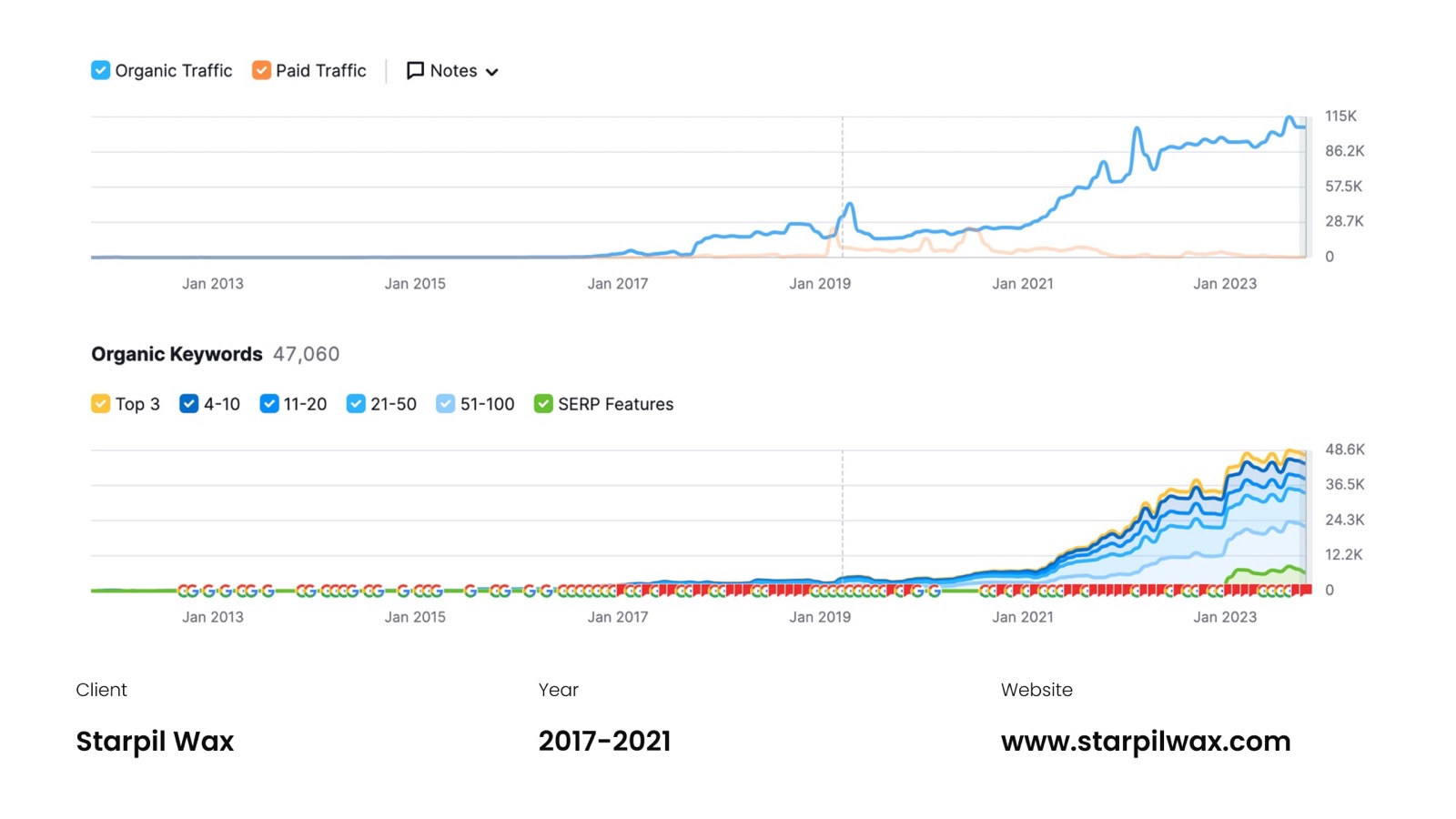
We treated SEO as go-to-market engineering for starpilwax.com: technical foundations, content architecture, and continuous optimization aimed at compounding discovery rather than chasing temporary ranking spikes. Search was built to produce revenue the business could trust year over year, not traffic screenshots for a slide deck.
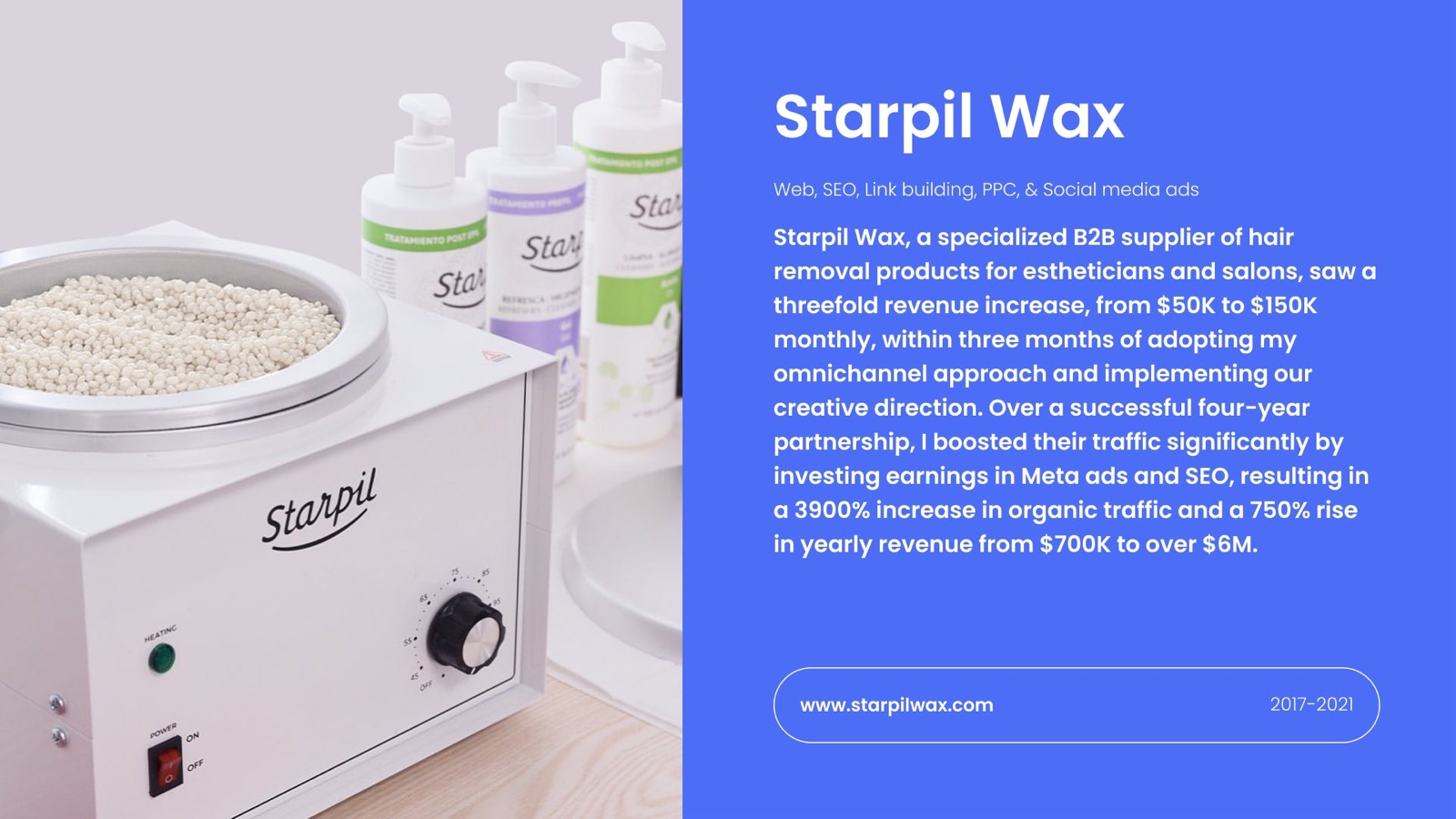
Organic SEO contributed more than $2M in recurring annual revenue. That number matters because it is the durable layer underneath paid. When search keeps earning, acquisition economics improve across the stack.
Meta ads on the same spine
Facebook and Instagram ads were not a separate agency silo. They sat on the same creative standards, brand system, and measurement expectations as SEO and the site.
Paid acquisition had to learn from what organic and social were already proving about demand. Creative testing, audience learning, and spend decisions ran as a continuous loop against revenue, not vanity engagement.
Facebook and Instagram ads contributed about $5M in revenue across the work. Social referral traffic rose about 2500%. Those are related outcomes: paid and organic social feed the same brand surface, and referral compounds when creative and messaging stay coherent.
Web and marketing on one operating model
Web development and marketing execution pulled from the same operating model instead of three disconnected calendars.
The storefront had to carry brand standards, convert the demand SEO and paid were generating, and give content and social a place to land. Marketing coordination across content, social, design, and paid meant prioritization lived in one system: what to ship, what to cut, and what the numbers said about both.
What it produced
Annual revenue moved from about $700K to $6M.
Organic SEO contributed more than $2M in recurring annual revenue. Facebook and Instagram ads contributed about $5M in revenue. Social referral traffic rose about 2500%. The marketing and sales org grew from near zero to a six-plus person team across content, social, design, and marketing management.
Worth being precise about how to read those numbers. SEO, Meta ads, web, branding, and the org build all ran inside the same engagement. Isolating any single input cleanly would overclaim what the instrumentation of the time could prove. The honest read is multi-input: channels stacked. Organic was the durable spine. Paid Meta scaled demand on the same brand and creative system. The team and standards kept the machine shipping. What matters is the outcome the machine produced at scale.