The opportunity
Positioning a brand through SEO is not about chasing the keywords with the most traffic. True success balances technical work with analytical judgment, and it always accounts for where the site stands today.
For EZ Melts, that meant treating search as a system. Not a list of vanity terms. Not a content calendar chasing whatever Semrush ranked highest that week. A system that asks, before every target goes live:
- Does this domain have the authority to compete for this keyword yet?
- If yes, where in the SERP Hierarchy is ranking actually achievable?
- Should we win at the collection level first, or go straight to product pages?
- What type of content is Google rewarding on those results right now?
Those questions guided every SEO decision on the engagement. Load what you have. Work the opportunities that match it. Turn attainable rankings into compounding authority.
Before
- Vanity keywords by raw volume
- Product pages fighting alone
- Trends snapshots without difficulty
- No clear authority ladder
After
- Targets matched to authority 19
- Collections as equity anchors
- Semrush difficulty + SERP truth
- Tablet today, vitamins tomorrow
Authority as the starting point
EZ Melts sat at an authority score of 19. That number is not a branding problem. It is a competitive constraint. Competing for the most contested, highest volume vitamin keywords against Amazon-scale domains was not realistic yet. Pretending otherwise would have burned months of content and link equity on pages that never had a fair shot.
Semrush made the ladder visible. Yellow and orange keywords sat in moderate difficulty, the current sweet spot. Red keywords were highly competitive, not yet attainable, and would have set the program up to fail. The job was to climb strategically: win mid-tier opportunities first, then let authority grow into the harder terms.

Why Semrush over Google Trends
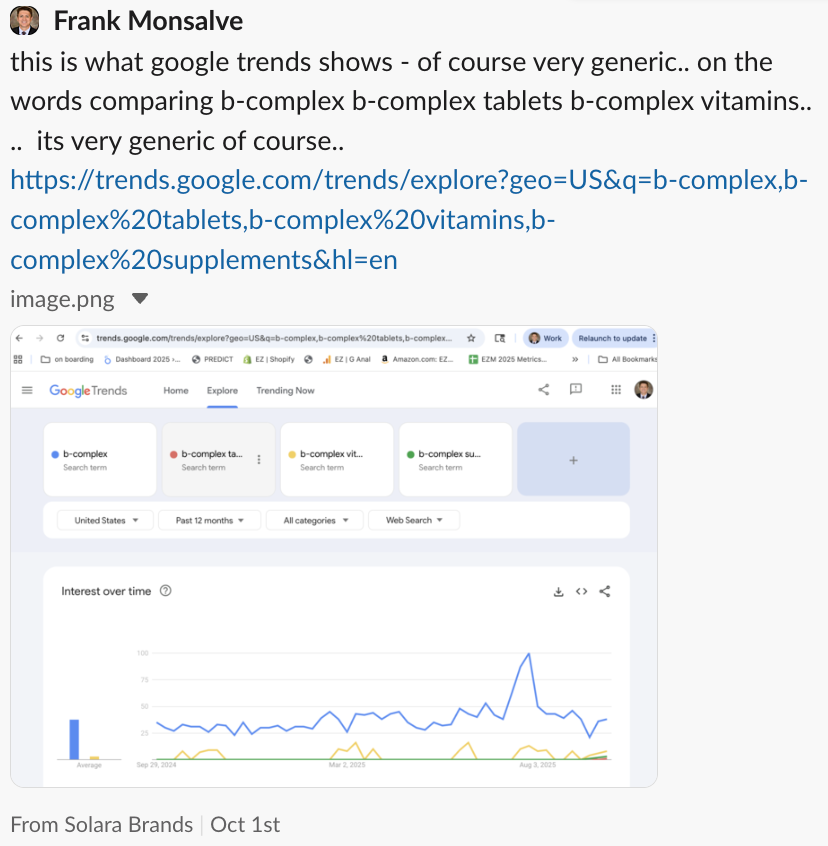
Google Trends is useful for a snapshot of interest over time and relative popularity. It is not enough to make keyword decisions that have to survive contact with real SERPs.
Semrush gave the fuller read: keyword difficulty and competitiveness, competitive analysis, search intent and SERP features, traffic potential and CTR estimates, plus backlink and authority metrics tied to ranking potential. That is the difference between knowing a term is popular and knowing whether EZ Melts can earn it.
We select keywords for search volume and for achievability, then align both with how the brand needs to grow. Volume without a path to rank is noise.
Volume without a path to rank is noise. We pick keywords for search volume and for achievability.
Collections first: how authority flows
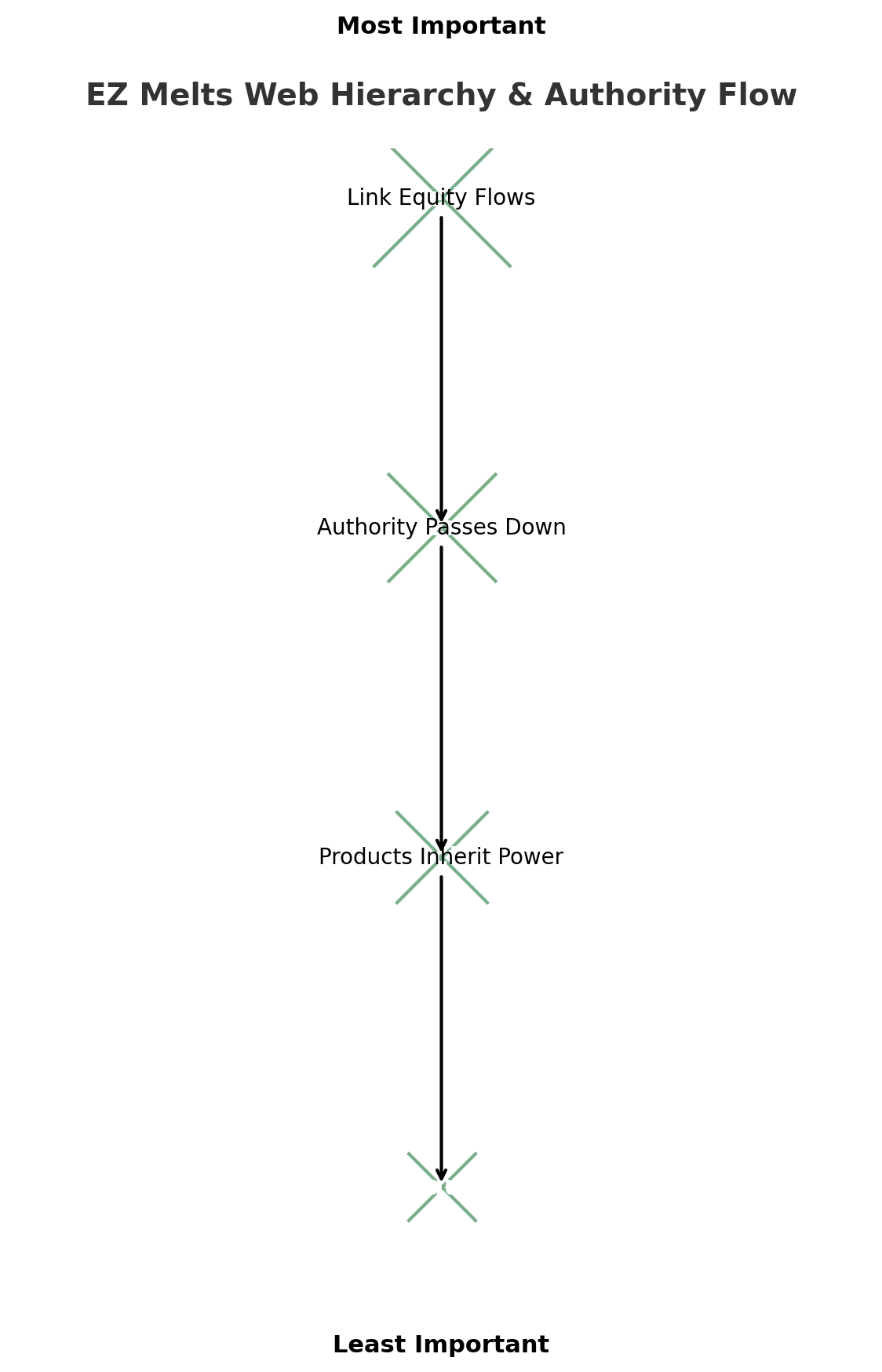
One of the most overlooked parts of ecommerce SEO is how link equity moves through a site. Authority flows top to bottom and left to right. How pages link to each other decides which URLs inherit power.
That is why the strategy put collection pages first. Collections are category-level anchors. They consolidate authority and compete for broader, higher value keywords. Product pages inherit from that structure instead of fighting alone for head terms they cannot yet hold.
The hierarchy is not decorative. Homepage links into collections. The menu distributes authority on purpose. Each collection gets optimized meta titles, descriptions, and URL slugs. Product pages sit downstream of that equity, not upstream of wishful thinking.
Priority collection keywords
We mapped collection targets for volume and for fit with what the site could realistically compete for:
| Keyword | Monthly searches |
|---|---|
| prenatal vitamins | 135,000 |
| vitamins for hair growth | 22,200 |
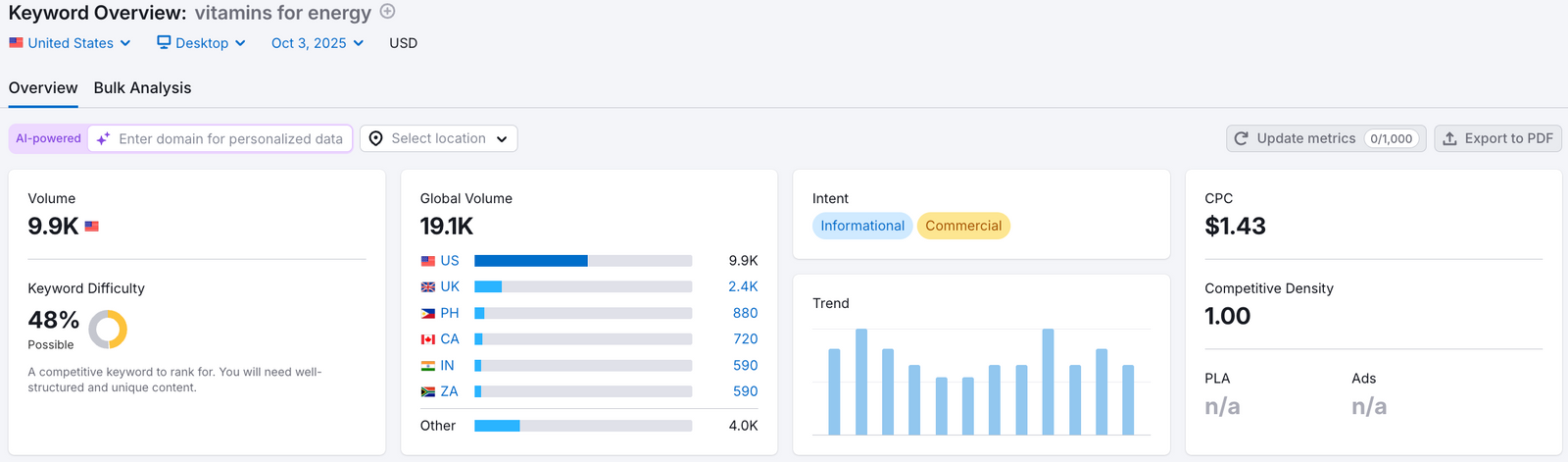
| vitamins for energy | 12,100 |
| vitamins for women | 8,100 |
| postnatal vitamins | 8,100 |
| vitamins for immune system | 5,400 |
| vitamins for men | 4,400 |
| vitamins for eyes | 3,600 |
| vitamins for brain health | 2,900 |
| vitamins for nails | 2,400 |
| vitamins for skin | 1,900 |
| vitamins for heart health | 1,900 |
| vitamins for metabolism | 1,600 |
| vitamins for gut health | 1,600 |
| vitamins for sleep | 1,600 |
| vitamins for bones/joints | 1,000 |
| vitamins for mood | 720 |
At collection level, when two close variations competed, we took the higher volume phrasing. "Vitamins for energy" over "supplements for energy." "Vitamins for men" over "supplements for men." Collections are where you capture the broadest demand the architecture can support.
Product terms: attainable over vanity
Product-level keywords follow a different rule than collections. Volume alone is a trap when authority is still being earned.
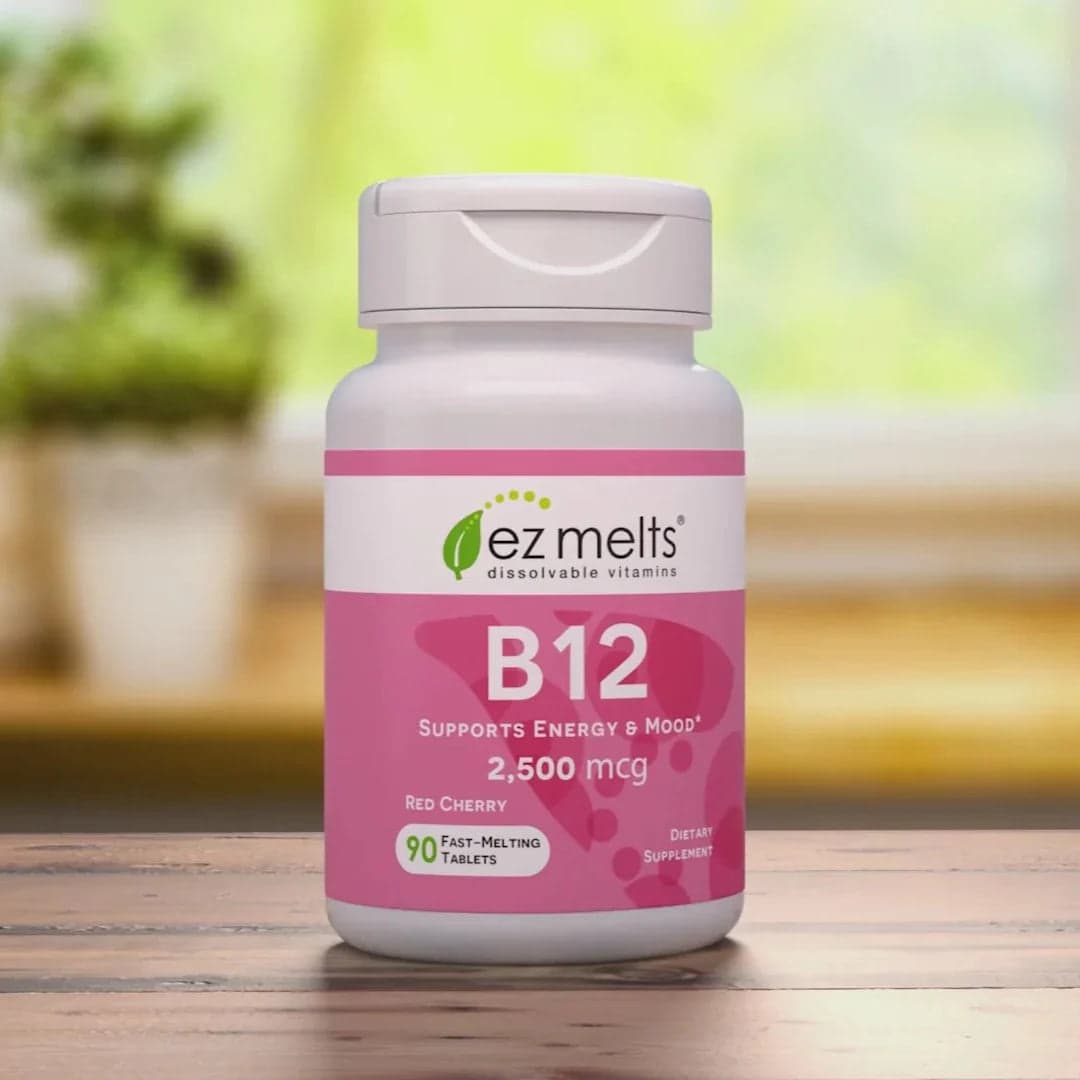
Take B complex. "B complex vitamins" pulls about 18,100 monthly searches. "B complex supplement" sits around 2,400. "B complex tablet" sits around 1,300. The obvious pick looks like the head term. With an authority score of 19, EZ Melts could not realistically beat the giants already owning that SERP.
Frank at Solara Labs asked the right question: why not apply the same higher volume logic we used on collections? Because product SERPs and collection SERPs do not behave the same way, and authority decides which fight you can enter.
Reverse-engineering the SERPs
A closer look at "b complex vitamins" showed Google prioritizing informational and research-driven pages. The only two product listings belonged to Amazon (authority around 99) and Walgreens (authority around 89). That is not a content problem. It is a weight class problem.
So we chose "b complex tablet" at roughly 1,300 searches. Lower volume. Far more attainable. That choice does three things at once: it puts EZ Melts in search now, it builds incremental authority on a winnable page, and it lays the foundation to move into higher volume terms later.
"B complex tablet" today is the stepping stone to "b complex vitamins" tomorrow. That is not settling. That is engineering the long game.